09 Jul
Modern consumers expect more than attractive packaging and persuasive marketing. They want to know where their products come from, how they were manufactured, whether they are genuine, and whether the brands they support uphold ethical and quality standards. In today’s global marketplace, however, supply chains are becoming increasingly complex, making transparency one of the greatest challenges for manufacturers and retailers alike.
Counterfeit goods, inaccurate labeling, and opaque sourcing practices continue to cost businesses billions of dollars every year while undermining consumer trust. From luxury fashion and electronics to food products and pharmaceuticals, buyers are demanding proof—not promises.
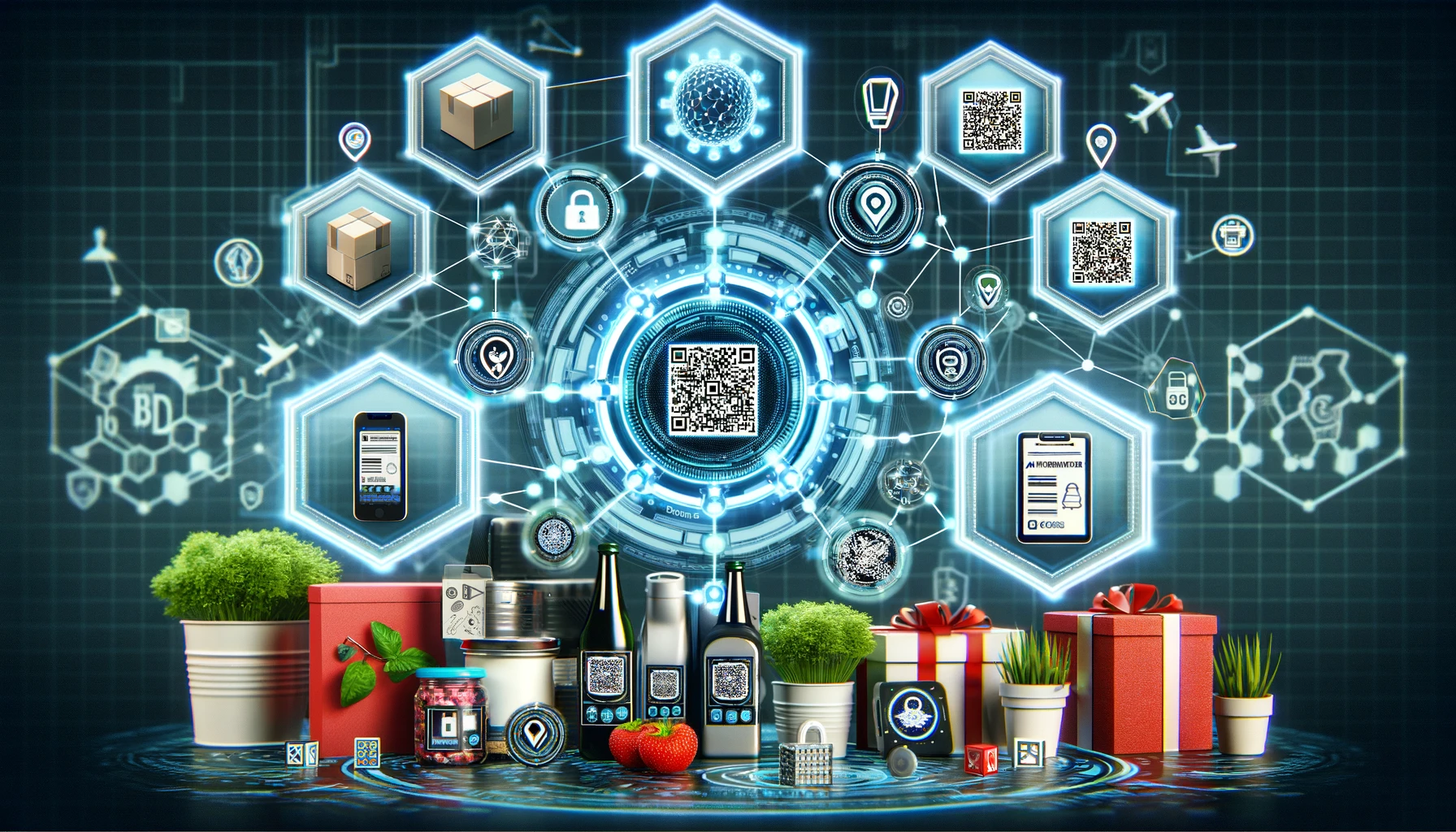
Blockchain technology is emerging as one of the most effective solutions to this challenge. By creating transparent, immutable, and verifiable records throughout the supply chain, blockchain is ushering in a new era of honest products. With something as simple as scanning a QR code, consumers can now access the complete journey of a product—from raw materials to the store shelf.
The future of commerce belongs to transparency, and blockchain is making that future possible.
Why Supply Chain Transparency Matters
Today’s supply chains often involve multiple participants operating across several countries, including:
- Raw material suppliers
- Manufacturers
- Logistics providers
- Customs authorities
- Warehouses
- Distributors
- Retailers
Each stage generates critical information about a product’s origin and handling. Unfortunately, traditional databases are frequently fragmented, difficult to verify, and vulnerable to manipulation or human error.
Consumers are increasingly asking important questions:
- Was this product ethically sourced?
- Is it authentic?
- Where was it manufactured?
- Has it been transported safely?
- Is the sustainability claim legitimate?
Without reliable and transparent data, answering these questions remains difficult for both businesses and customers.
Blockchain provides a shared and tamper-resistant digital infrastructure capable of solving these problems at scale.
What Makes Blockchain Different?
Blockchain functions as a decentralized ledger that records every transaction or event in a secure and immutable format.
Once information is added to the blockchain, it cannot be altered without consensus among network participants.
This provides several significant advantages:
- Data integrity
- Transparency
- Traceability
- Enhanced security
- Reduced fraud risks
- Real-time verification
Instead of relying on multiple disconnected systems, supply chain participants can securely contribute information to a single source of truth.
Every authorized stakeholder gains access to accurate and up-to-date information throughout the product lifecycle.
From Raw Materials to Store Shelves
One of blockchain’s greatest strengths lies in its ability to track products throughout their entire journey.
Imagine purchasing a premium organic coffee product.
Using blockchain, its digital history could include:
Raw Material Stage
- Farm location
- Harvest date
- Certification details
- Sustainability credentials
Manufacturing Stage
- Processing facilities
- Quality assurance inspections
- Production dates
- Batch numbers
Transportation Stage
- Shipping routes
- Customs clearance records
- Storage conditions
- Delivery confirmations
Retail Stage
- Warehouse arrival
- Store delivery dates
- Inventory verification
- Product authentication
Every transaction becomes part of the product’s permanent digital identity.
Consumers no longer need to rely solely on marketing claims—they can independently verify the information themselves.
The Power of QR Codes
Blockchain transparency becomes particularly valuable when combined with user-friendly technologies such as QR codes.
Today’s consumers are already accustomed to scanning codes using their smartphones.
By scanning a blockchain-powered QR code, customers can instantly access:
- Product origin
- Manufacturing details
- Shipping history
- Sustainability certifications
- Quality control records
- Authenticity verification
The process is remarkably simple:
- Scan the QR code.
- Access the blockchain record.
- Verify product authenticity.
- Review the complete supply chain history.
What once required extensive documentation and manual verification can now be completed in seconds.
Building Consumer Trust
Trust has become one of the world’s most valuable business assets.
Consumers are increasingly willing to support brands that demonstrate:
- Transparency
- Sustainability
- Ethical sourcing
- Product authenticity
- Corporate responsibility
Blockchain enables businesses to transform trust from a marketing slogan into a verifiable fact.
Rather than saying:
“Our products are responsibly sourced.”
Brands can now demonstrate:
“Here is the complete, immutable record proving it.”
This shift fundamentally changes the relationship between businesses and consumers.
Transparency becomes measurable rather than symbolic.
Fighting Supply Chain Fraud
Supply chain fraud remains a significant global issue across multiple industries.
Common problems include:
- Counterfeit products
- Unauthorized substitutions
- False certifications
- Mislabeling
- Documentation fraud
Blockchain dramatically reduces opportunities for manipulation by ensuring that every supply chain event is securely recorded and easily auditable.
Any attempt to introduce counterfeit or unauthorized products becomes significantly more difficult when every legitimate item possesses a unique digital identity.
The technology effectively creates a digital fingerprint for physical products.
Sustainability Becomes Verifiable
Environmental and sustainability claims have become powerful marketing tools. However, consumers are increasingly skeptical of vague promises regarding:
- Carbon neutrality
- Ethical production
- Sustainable sourcing
- Recycling initiatives
Blockchain introduces unprecedented accountability.
Companies can provide verifiable records showing:
- Supplier certifications
- Carbon footprint measurements
- Manufacturing practices
- Transportation emissions
- Sustainability audits
This significantly reduces the risk of greenwashing while improving the credibility of ESG initiatives.
Benefits for Businesses
Blockchain transparency delivers substantial advantages beyond consumer trust.
Businesses may benefit from:
Improved Efficiency
- Faster audits
- Simplified compliance reporting
- Streamlined supply chain management
Reduced Costs
- Lower fraud-related losses
- Fewer disputes
- Improved inventory management
Enhanced Brand Reputation
- Increased consumer confidence
- Stronger market differentiation
- Improved customer loyalty
Better Risk Management
- Faster product recalls
- Improved regulatory compliance
- Greater supply chain visibility
Transparency ultimately becomes a competitive advantage.
Product Recalls Become Faster and More Accurate
Traditional product recalls often involve:
- Significant delays
- Broad recalls affecting unaffected inventory
- Extensive financial losses
- Consumer uncertainty
Blockchain enables companies to identify affected products with exceptional precision.
Instead of recalling millions of units unnecessarily, businesses can determine:
- Which batch is affected
- When it entered the supply chain
- Where it was distributed
- Which customers may be impacted
This level of traceability significantly improves both safety and operational efficiency.
Industries Leading Blockchain Adoption
Blockchain-powered supply chain solutions are already being explored and implemented across numerous sectors, including:
- Food and beverage
- Luxury goods
- Pharmaceuticals
- Electronics
- Automotive manufacturing
- Fashion
- Consumer packaged goods
Each industry benefits from increased transparency and reduced counterfeiting risks.
As adoption continues to expand, consumers are likely to view blockchain-backed transparency as a standard expectation rather than a premium feature.
Challenges That Remain
Despite its advantages, blockchain implementation is not without challenges.
Businesses must address:
- Integration with legacy systems
- Industry-wide collaboration
- Regulatory requirements
- Data standardization
- Scalability considerations
- Employee training
Successful blockchain adoption depends not only on technology but also on cooperation between all supply chain participants.
Transparency is ultimately a collective effort.
The Future of Honest Commerce
The next generation of supply chains will likely be defined by three key characteristics:
- Transparency
- Automation
- Trust
Consumers will increasingly expect instant access to verified product information before making purchasing decisions.
In the near future, scanning a QR code may become as common as reading a product label.
Blockchain will enable businesses to move beyond traditional branding strategies and embrace verifiable authenticity as a core component of their value proposition.
Honest products will no longer rely solely on corporate promises—they will be supported by immutable digital evidence.
Conclusion
Blockchain is transforming supply chain transparency by creating a secure and trustworthy digital history for every product. From raw materials to retail shelves, every step can be recorded, verified, and shared with consumers in real time.
By combining blockchain infrastructure with accessible technologies such as QR codes, businesses are empowering consumers to make more informed purchasing decisions while protecting brands from fraud and counterfeiting.
The era of honest products has already begun. In a marketplace increasingly driven by trust and transparency, blockchain is proving that authenticity is no longer just a claim—it is something that can be verified with a single scan.
For businesses, the message is clear: the future belongs to those willing to make their products not only exceptional, but genuinely transparent.