01 Apr
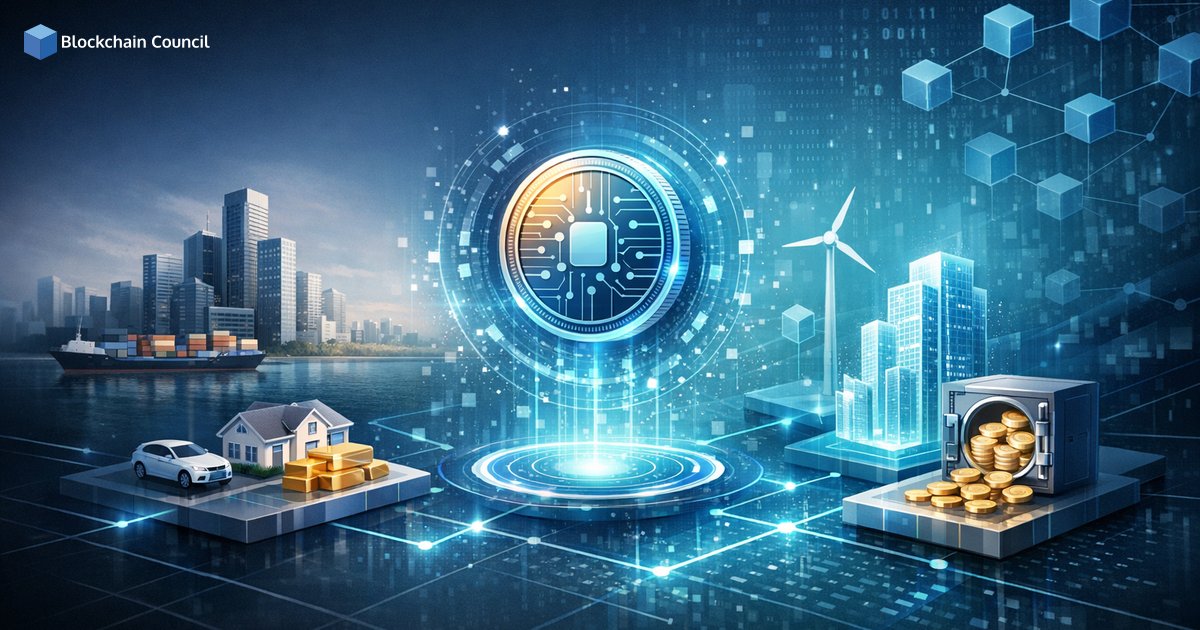
Global commerce is undergoing one of the most significant transformations since the advent of the internet. Traditional supply chains are evolving into highly interconnected value chains where information, assets, and capital move across digital ecosystems with unprecedented speed and efficiency. Businesses are no longer competing solely on the quality of their products or services—they are competing on the intelligence, transparency, and flexibility of their entire value networks.
Over the next five years, blockchain technology is expected to play a central role in reshaping how organizations create, exchange, and manage value across industries. One of the most promising developments driving this transformation is asset tokenization—the process of representing physical and digital assets as blockchain-based tokens.
From real estate and commodities to inventory, intellectual property, and financial instruments, tokenization has the potential to fundamentally redefine ownership, liquidity, and global trade. Combined with decentralized infrastructure, smart contracts, and intelligent supply chain networks, tokenized assets are paving the way for a new generation of global trade ecosystems.
The future of commerce will not simply be digital. It will be programmable, transparent, and increasingly interconnected.
Understanding Modern Value Chains
Traditional supply chains focus primarily on the movement of products from manufacturers to consumers. Modern value chains, however, encompass much more than physical goods.
Today’s value chains include:
- Data
- Financial assets
- Intellectual property
- Digital services
- Sustainability metrics
- Regulatory compliance
- Customer experiences
Businesses now create value through collaboration across complex global ecosystems involving:
- Manufacturers
- Logistics providers
- Financial institutions
- Technology platforms
- Regulatory authorities
- Consumers
As these networks become increasingly sophisticated, organizations require more efficient methods for managing ownership, transactions, and information exchange.
Blockchain technology provides the foundation for this evolution.
What Is Asset Tokenization?
Asset tokenization is the process of converting ownership rights or economic interests in an asset into digital tokens recorded on blockchain networks.
Virtually any asset can potentially be tokenized, including:
- Real estate
- Commodities
- Company shares
- Supply chain inventory
- Carbon credits
- Intellectual property
- Infrastructure assets
- Digital goods
Each token represents a specific ownership interest or entitlement that can be securely transferred and verified through blockchain technology.
Tokenization enables assets to become:
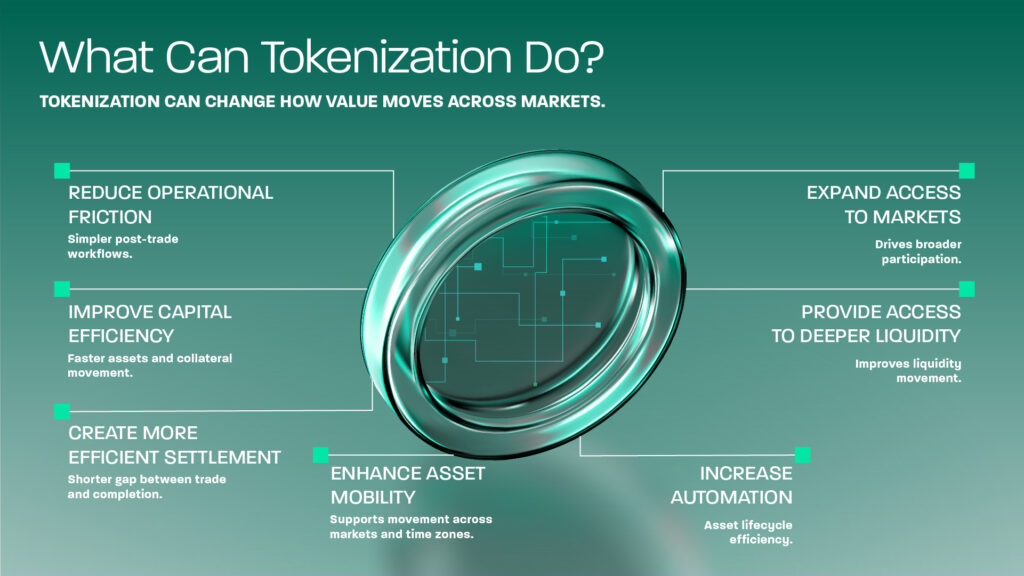
- More accessible
- More liquid
- Easier to trade
- More transparent
- Programmable through smart contracts
This capability has profound implications for global commerce.
Why Tokenization Matters for Global Trade
Global trade remains burdened by numerous inefficiencies, including:
- Administrative complexity
- Settlement delays
- Limited liquidity
- Fragmented documentation systems
- Cross-border payment challenges
Tokenized assets can significantly improve these processes by enabling:
- Real-time ownership transfers
- Automated settlements
- Fractional ownership models
- Enhanced supply chain visibility
- Improved interoperability between systems
The movement of value becomes significantly faster and more efficient when assets exist in programmable digital formats.
Tokenized Supply Chain Assets
Supply chains themselves are becoming increasingly valuable sources of digital assets.
Organizations may eventually tokenize:
- Inventory holdings
- Warehouse receipts
- Shipping rights
- Commodity reserves
- Trade finance instruments
- Manufacturing capacity
For example, a company may tokenize inventory stored within a global warehouse network and use those digital assets as collateral for financing arrangements.
This creates entirely new opportunities for:
- Liquidity management
- Supply chain financing
- Global investment participation
Value chains become more dynamic and financially efficient.
Fractional Ownership Creates New Markets
Tokenization enables assets to be divided into smaller ownership units.
Fractional ownership models can significantly increase market accessibility.
Examples include:
Commercial Real Estate
Investors may purchase fractional ownership interests in large properties.
Commodities
Businesses can tokenize physical commodity reserves for more efficient trading.
Infrastructure Projects
Global investors may participate in infrastructure financing through tokenized ownership structures.
Supply Chain Financing
Inventory and receivables can become tokenized financial assets.
By lowering barriers to participation, tokenization has the potential to unlock substantial global liquidity.
Smart Contracts Automate Trade Ecosystems
Smart contracts represent one of the most powerful components of tokenized value chains.
These programmable agreements can automatically:
- Execute payments
- Transfer ownership
- Verify compliance requirements
- Manage financing arrangements
- Enforce contractual obligations
For example:
- A shipment arrives at its destination.
- IoT sensors verify cargo conditions.
- Ownership tokens transfer automatically.
- Payment is released instantly.
- Compliance records are updated in real time.
Entire commercial processes become increasingly autonomous and efficient.
Building Global Trade Ecosystems
Future value chains are unlikely to operate as isolated corporate networks.
Instead, businesses will participate in global trade ecosystems that connect:
- Manufacturers
- Suppliers
- Financial institutions
- Governments
- Logistics providers
- Technology platforms
Blockchain infrastructure enables these participants to collaborate securely while maintaining operational independence.
Benefits include:
- Greater transparency
- Faster transactions
- Reduced administrative costs
- Improved supply chain resilience
- Enhanced regulatory compliance
Global commerce becomes increasingly interconnected and intelligent.
Tokenization Improves Supply Chain Finance
Access to financing remains a major challenge for businesses worldwide, particularly within international supply chains.
Tokenization can significantly improve supply chain finance by enabling organizations to tokenize:
- Accounts receivable
- Inventory assets
- Trade contracts
- Commodity holdings
These tokenized assets may provide:
- Improved liquidity
- Faster financing approvals
- Reduced transaction costs
- Greater investor participation
Financial markets become more closely integrated with physical supply chains.
ESG and Tokenized Sustainability Assets
Environmental sustainability is becoming increasingly important within global commerce.
Tokenization may support ESG initiatives through digital representations of:
- Carbon credits
- Renewable energy certificates
- Sustainability performance metrics
- Environmental compliance records
Businesses can trade and verify sustainability-related assets more efficiently through blockchain-enabled markets.
Transparent ESG ecosystems are likely to become an important component of future value chains.
Cross-Border Trade Without Friction
International commerce frequently involves:
- Multiple currencies
- Regulatory requirements
- Settlement delays
- Complex documentation procedures
Tokenized assets can help simplify cross-border transactions by enabling:
- Programmable payments
- Real-time settlements
- Automated compliance checks
- Digital ownership verification
Combined with decentralized financial infrastructure, tokenization has the potential to significantly reduce friction throughout global trade networks.
The future of commerce is increasingly borderless.
Challenges Facing Tokenization
Despite its tremendous potential, asset tokenization remains an emerging field that faces several important challenges.
These include:
- Regulatory uncertainty
- Technology standardization
- Cross-border legal frameworks
- Infrastructure development
- Market adoption
- Interoperability requirements
Successful implementation will depend upon collaboration among:
- Governments
- Financial institutions
- Technology providers
- Industry consortia
- Regulatory bodies
The evolution of tokenized value chains will occur gradually as supporting infrastructure matures.
The Next Five Years: What to Expect
Over the next five years, several trends are likely to shape the future of tokenized global trade ecosystems.
Businesses can expect increased adoption of:
- Digital supply chain infrastructure
- Tokenized trade assets
- Smart contract automation
- Blockchain consortium networks
- Real-time settlement systems
- AI-powered supply chain optimization
- Decentralized identity solutions
- Sustainable trade initiatives
Organizations that invest early in blockchain-enabled ecosystems may gain significant competitive advantages as digital commerce continues to evolve.
From Supply Chains to Value Networks
The distinction between physical and digital commerce is rapidly disappearing.
Future value chains will increasingly function as intelligent networks where:
- Assets are programmable.
- Ownership is transparent.
- Transactions are automated.
- Sustainability is verifiable.
- Financing is more accessible.
- Collaboration is frictionless.
Blockchain and tokenization are not merely technological upgrades—they represent a fundamental redesign of how value is created and exchanged within the global economy.
Conclusion
Asset tokenization is poised to transform global trade by creating more transparent, liquid, and interconnected value chains. By digitizing ownership rights and integrating them with blockchain infrastructure, businesses can unlock entirely new models of collaboration, financing, and commercial efficiency.
The next generation of global trade ecosystems will combine tokenized assets, smart contracts, real-time data, and decentralized technologies to create highly intelligent value networks capable of operating across borders and industries.
The future of commerce will be defined not only by what businesses produce, but by how effectively they connect people, assets, and information within programmable global ecosystems.
As supply chains evolve into digital value networks, one thing is becoming increasingly clear: tokenization is not simply shaping the future of trade—it is helping build it.